
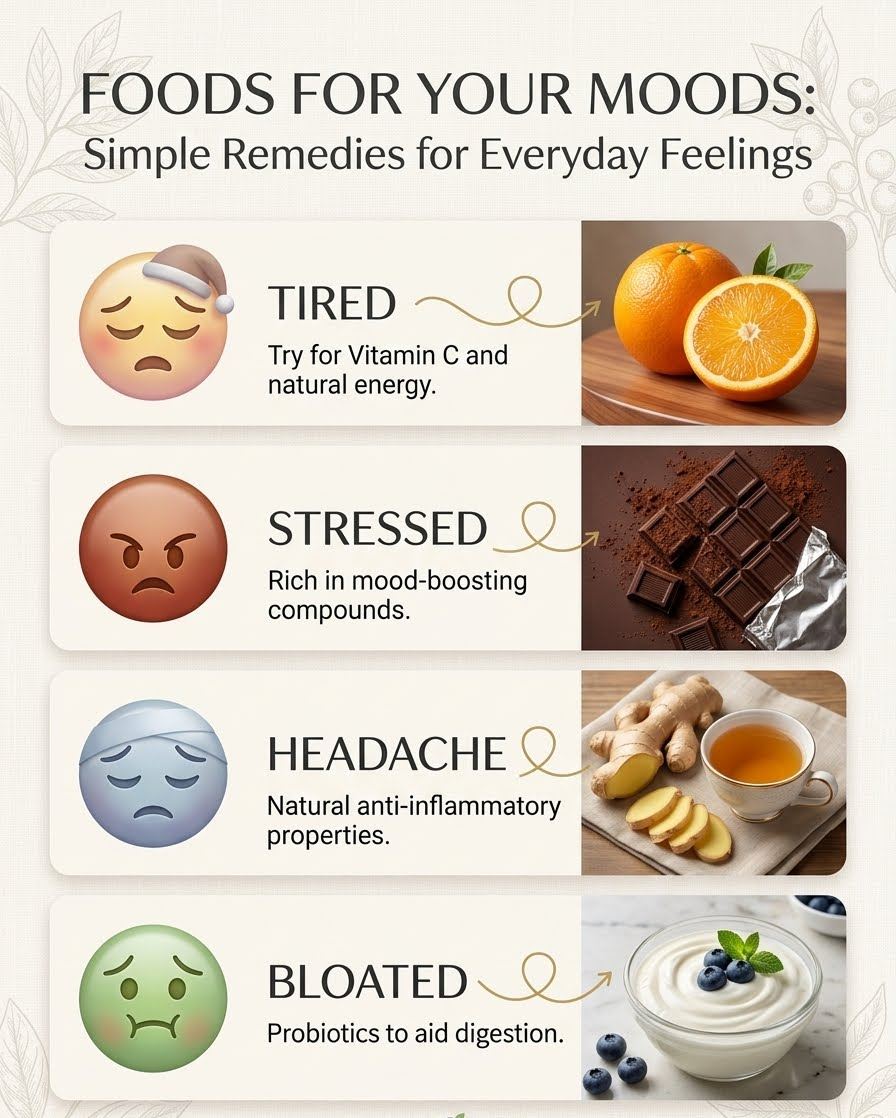
Craving Comfort Food Isn’t Automatically Bad
This part matters.
There’s a huge difference between comforting yourself with food sometimes and depending on food for every emotional need. One is normal. The other usually signals something deeper going on.
Warm soup after a brutal day? Human.
Eating until you feel numb because you don’t know how else to cope? That’s different.
The goal isn’t perfection. It’s awareness.
You start noticing patterns:
- stress makes you crave sugar
- boredom sends you toward crunchy snacks
- exhaustion pushes you toward caffeine and carbs
- loneliness makes late-night eating feel strangely comforting
Once you notice the pattern, you can respond more intentionally instead of automatically.

That’s where change actually begins.
Food Helps, But It Can’t Carry Everything
A banana won’t heal heartbreak. Green tea won’t erase burnout. Dark chocolate cannot fix a toxic relationship, unfortunately.
Still, nutrition affects mood more than many people realize. Stable blood sugar, hydration, healthy fats, magnesium, protein — these things influence emotional resilience in quiet ways that add up over time.
And maybe that’s the better way to look at it.
Not as “good foods” versus “bad foods.” Not as punishment or reward. Just support. Small acts of care repeated often enough that your body starts trusting you again.
Some days that looks like salmon and leafy greens.
Other days it looks like mac and cheese eaten on the couch while life feels complicated.
Honestly? Both can exist.
ADVERTISEMENT
