
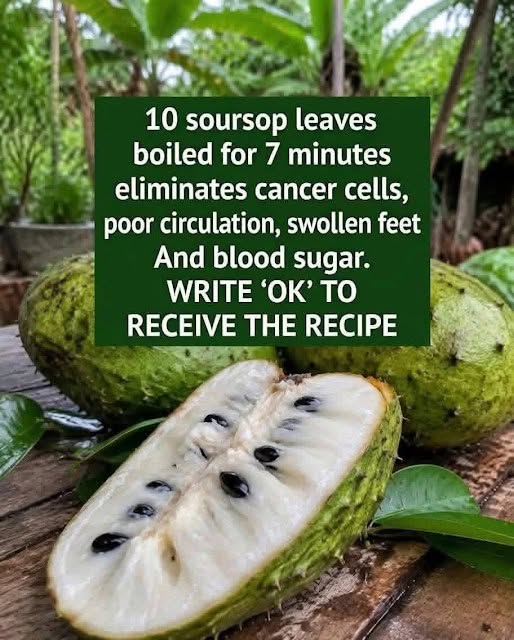
That viral post about boiling 10 soursop leaves for 7 minutes is everywhere right now. The claim is that it eliminates cancer cells, fixes poor circulation, swollen feet, and blood sugar. Soursop, also called graviola or guanábana, is a real tropical fruit with a long history in traditional medicine, and the leaf tea is popular in the Caribbean, West Africa, and Southeast Asia. Here is what soursop leaf tea actually is, how people prepare it, what the research shows so far, and the safety issues you need to know before trying it.
What Is Soursop
Soursop is Annona muricata, a spiky green fruit with soft white pulp. It tastes like a mix of pineapple, strawberry, and citrus. The fruit is eaten fresh, made into juice, smoothies, and ice cream.
The leaves are different from the fruit. In traditional herbal practice, dried soursop leaves are boiled to make a tea. It has an earthy, slightly bitter taste, similar to green tea. This is what the viral image is referring to, not the fruit pulp.
Traditional Uses of Soursop Leaf Tea
In folk medicine, soursop leaf tea has been used for generations as a calming bedtime tea, for digestive comfort, and general wellness support. In some regions it is used as a traditional tonic for inflammation and blood sugar management.
These are traditional uses, not proven medical treatments. There is a big difference between centuries of folk use and clinical evidence in humans.
What Does the Science Say
This is the important part. Lab studies, usually in test tubes and in animals, have found compounds in soursop leaves called annonaceous acetogenins. In lab conditions, these compounds have shown activity against certain cancer cell lines.
That does NOT mean soursop leaf tea eliminates cancer cells in people. There are zero large, high-quality human clinical trials showing soursop cures or treats cancer, poor circulation, swollen feet, or diabetes. Lab results rarely translate directly to the human body, and the doses used in labs are far higher than what you get from tea.
Major cancer organizations state clearly: do not use soursop as a cancer treatment, and do not replace any prescribed medication with it. If you have cancer, diabetes, circulation issues, or swelling in your feet, talk to your doctor. Those symptoms need proper medical evaluation.
Soursop leaf tea is best viewed as an herbal tea, similar to chamomile or hibiscus, not a drug.
How to Make Soursop Leaf Tea the Traditional Way
If you want to try it as a tea for general wellness, this is how it is traditionally prepared.
Ingredients:
• 5 to 10 dried soursop leaves, washed
• 3 cups filtered water
• Honey or lemon to taste, optional
Instructions:
1. Prep the Leaves
Rinse dried leaves under cool water to remove dust. If using fresh leaves, use about 15 leaves since fresh is less concentrated. Tear them lightly to help release compounds.
2. Boil
Bring 3 cups of water to a boil in a stainless steel pot. Add the leaves. Reduce to a gentle simmer. Simmer for 7 to 10 minutes. The water will turn a light golden-amber color.
3. Steep and Strain
Turn off the heat. Cover and steep for another 10 minutes. Strain through a fine mesh sieve into a mug.
4. Serve
Drink warm. It is naturally caffeine-free, so many people drink it in the evening. Add a teaspoon of honey or a squeeze of lemon if you find the taste bitter.
This makes about 2 to 3 servings. Traditional use is 1 cup per day, not multiple liters.
Nutrition and Compounds in Soursop
The fruit itself is nutritious. It provides vitamin C, potassium, magnesium, and fiber. The leaves contain antioxidants, flavonoids, and acetogenins, which are the compounds studied in labs.
The tea is low calorie and caffeine-free. It is not a significant source of vitamins, it is consumed for its plant compounds and as a relaxing ritual.
Safety Warnings You Need to Read
Soursop leaf tea is not risk-free, especially with long-term or high-dose use.
Next page
ADVERTISEMENT
