
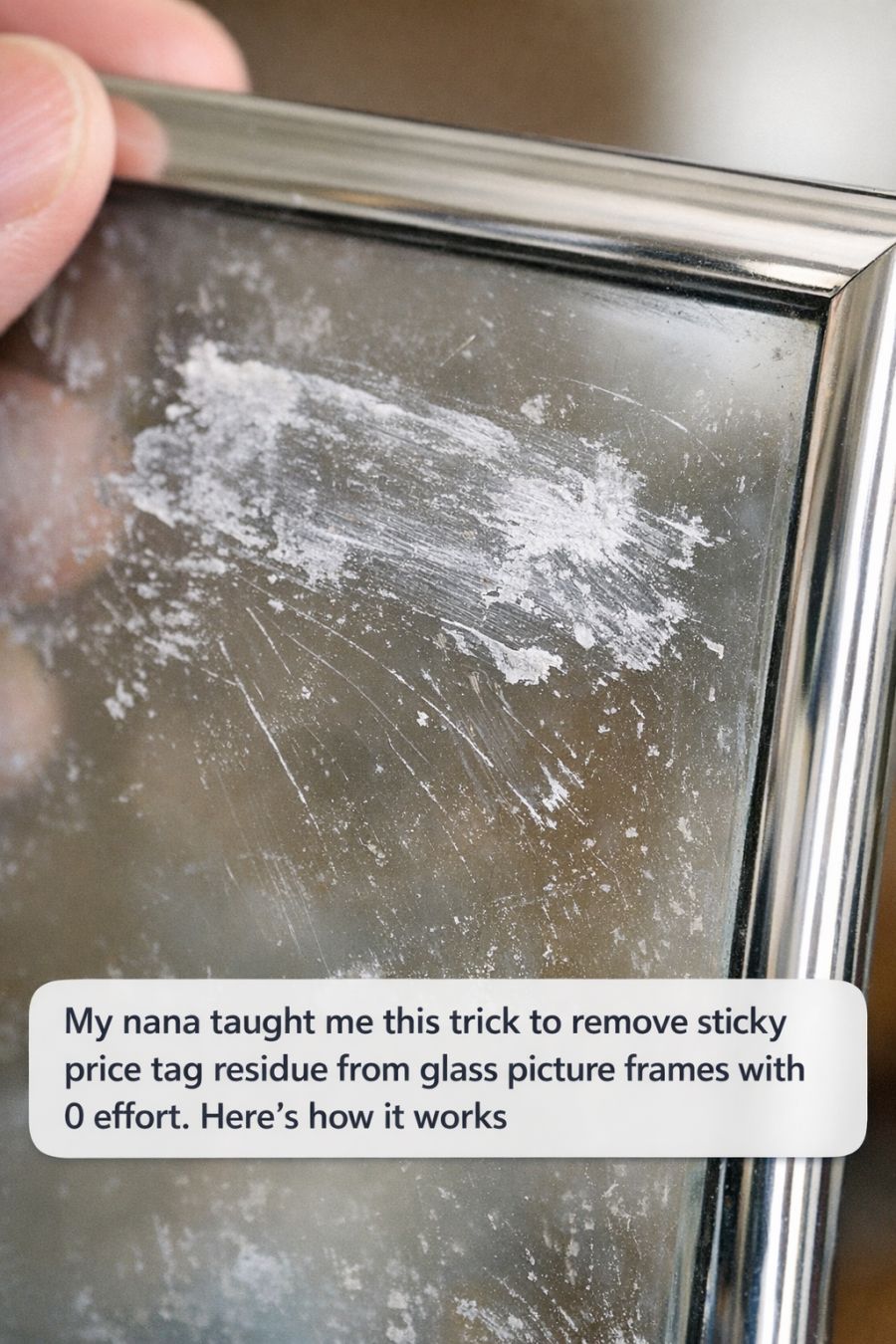
Every household has faced the frustrating challenge of dealing with sticky price tag residue on glass picture frames. The pristine look of a newly purchased frame is often marred by the stubborn adhesive left behind after the tag is removed. While many resort to scrubbing or using sharp tools, these methods risk scratching the glass or leaving unsightly streaks.
Thankfully, there is a time-tested trick that requires little to no effort, passed down through generations. My nana, with her treasure trove of household hacks, revealed this simple yet effective method to me. It’s a solution that uses common household items and guarantees residue-free glass without the hassle.
1. The Annoying Problem With Sticky Price Tags on Glass Frames
Price tags are often applied with strong adhesives to ensure they remain attached throughout the product’s shelf life. Unfortunately, when it’s time to remove them, the adhesive doesn’t come off as easily as the paper tag itself. This leaves a sticky residue that’s both visually unappealing and a magnet for dust and dirt. The residue can cover an area as large as a few square inches, depending on the size of the tag, and often seems immune to regular cleaning methods.
2. The Old-School Trick My Nana Swore By
My nana’s trick is simplicity itself. With just a few everyday household items, she could remove even the most stubborn adhesive without breaking a sweat. Her method doesn’t require any fancy cleaning products or expensive solutions. Instead, she relied on a natural approach, capitalizing on the properties of common substances that dissolve adhesives without damaging the glass.
3. What You Need: Simple Household Items Only
The items you’ll need for this trick are likely already in your kitchen or bathroom. Gather some olive oil or any other cooking oil, a small amount of baking soda, a soft cloth or sponge, and a gentle dish soap. These items work together to break down the adhesive, allowing for easy removal. For best results, use about a teaspoon of baking soda and a tablespoon of oil.
4. Step 1: Loosen the Sticker Without Scratching the Glass
Begin by gently peeling off as much of the paper tag as possible. Use your fingernail or a plastic scraper to avoid scratching the glass. If the tag is particularly stubborn, apply a little warm water to soften the paper. This step helps to lessen the amount of residue left on the glass, making the subsequent cleaning easier.
5. Step 2: Apply Nana’s Secret Residue-Removing Mix
In a small bowl, mix together the teaspoon of baking soda with the tablespoon of olive oil until you have a consistent paste. This combination forms a gentle abrasive that helps lift the residue off the glass. Apply the mixture directly onto the sticky area using your fingers or a soft cloth, ensuring that the entire residue is covered.
6. Step 3: Let It Sit and Do the Work for You
Allow the mixture to sit on the residue for about 10 to 15 minutes. This gives the oil time to penetrate the adhesive, breaking it down, while the baking soda works as a mild abrasive to lift the glue away from the surface. During this time, the residue will begin to dissolve, requiring less effort when it comes time to wipe it away.
7. Step 4: Wipe Away the Gunk With Almost No Effort
After the mixture has had time to work its magic, take a clean cloth or sponge and gently wipe away the paste along with the residue. You’ll notice that the sticky mess comes off easily, leaving the glass clear and spotless. If any residue remains, repeat the process, applying a bit more pressure if needed.
8. Why This Hack Works Better Than Peeling or Scraping
Unlike peeling or scraping, which can damage the surface of the glass, this method uses the natural properties of oil to weaken the adhesive bond. The baking soda adds just enough grit to remove the residue without scratching. This approach minimizes the risk of damage, making it ideal for delicate surfaces.
9. Common Mistakes That Make Sticky Residue Even Worse
One common mistake is using sharp tools that can scratch the glass. Another is applying too much pressure when scrubbing, which can spread the adhesive around rather than removing it. Avoid using harsh chemical solvents, as they can damage both the glass and any surrounding frame materials.
10. Safe Variations for Tinted, Antique, or Delicate Frames
For tinted or antique glass, test the mixture on a small, inconspicuous area first to ensure it doesn’t affect the finish. If dealing with particularly delicate frames, use less baking soda or substitute it with cornstarch, which is even less abrasive. Always handle such items with care to preserve their integrity.
11. Other Surfaces You Can Rescue With This Same Trick
This method isn’t limited to glass frames. It can also be used on glass bottles, mirrors, porcelain, and even some plastics. Just ensure that the surface can handle the oil and gentle abrasive before applying the mixture. With a little experimentation, you’ll find this trick can rescue a wide variety of household items plagued by sticky residue.
ADVERTISEMENT
