
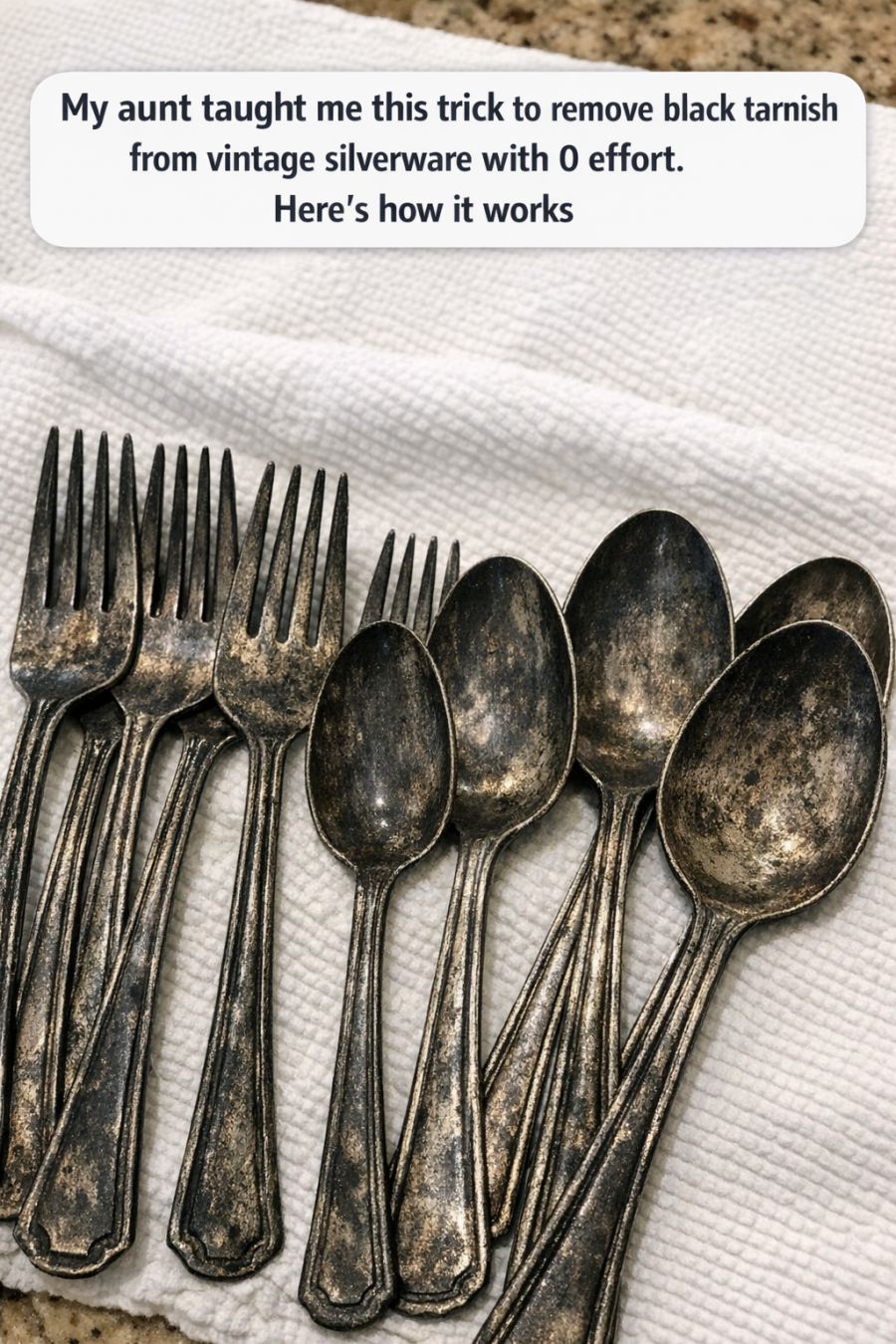
There’s something timeless and elegant about vintage silverware. Whether it’s a family heirloom passed down through generations or a lucky find at an antique shop, silverware adds a touch of sophistication to any table. However, the beauty of these pieces can be overshadowed by the inevitable tarnish that develops over time, turning their shine into a dull, blackened hue.
As someone who cherishes the past and adores the charm of vintage silver, I was at a loss when my beloved pieces lost their luster. That’s when my aunt, with her wealth of practical wisdom, came to the rescue. She taught me a simple, almost magical trick to restore my silverware to its former glory without any effort on my part. Here’s how it works.
1. The Day My Aunt Saved My Tarnished Silverware
I remember it vividly—it was a sunny Saturday afternoon, and I had invited my aunt over for tea. As we set the table, she noticed my tarnished silverware and immediately offered her advice. “Why don’t you try my easy trick to clean these up?” she suggested with a knowing smile.
Skeptical but curious, I agreed to give it a shot. She instructed me to gather a few items: some aluminum foil, baking soda, and a large basin. In less than an hour, my silverware was gleaming like new, and I couldn’t believe how effortless it was.
2. Why Silver Turns Black In The First Place
Silver tarnishes because it reacts with sulfur-containing substances in the air. This reaction forms silver sulfide, which appears as a black coating on the surface of silverware. The more exposure silver has to sulfur compounds, the faster and more noticeable the tarnish becomes.
Common sources of sulfur include pollution, certain foods like eggs and onions, and even wool and rubber. Understanding the cause of tarnish helps in preventing it and restoring the silver’s natural shine.
3. The Zero-Effort Trick: What You Actually Need
The beauty of my aunt’s method lies in its simplicity and minimal requirements. Here’s what you’ll need:
– A large basin or sink
– Aluminum foil
– Baking soda (about half a cup for a large batch of silverware)
– Boiling water
With these few items, you’re ready to bring your vintage silverware back to life without any scrubbing or polishing.
4. Step-By-Step: Setting Up The Magic Tarnish-Removing Bath
Begin by lining the bottom of your basin with aluminum foil, shiny side up. The foil is crucial as it facilitates the reaction needed to remove tarnish.
Next, place your tarnished silverware on top of the foil. Ensure the pieces are in contact with the foil for the reaction to occur effectively.
Sprinkle the baking soda evenly over the silverware. Then, carefully pour boiling water into the basin, covering the silverware completely. As you do this, you’ll notice a gentle fizzing sound, which means the reaction is underway.
5. How The Science Works While You Do Nothing
The process that unfolds in your basin is a simple chemical reaction known as ion exchange. The baking soda, aluminum foil, and boiling water create an electrolytic solution.
In this solution, the aluminum attracts the sulfur atoms away from the silver sulfide, effectively reversing the tarnish. As a result, the silver is left behind in its untarnished state, restoring its shine without any manual effort.
