
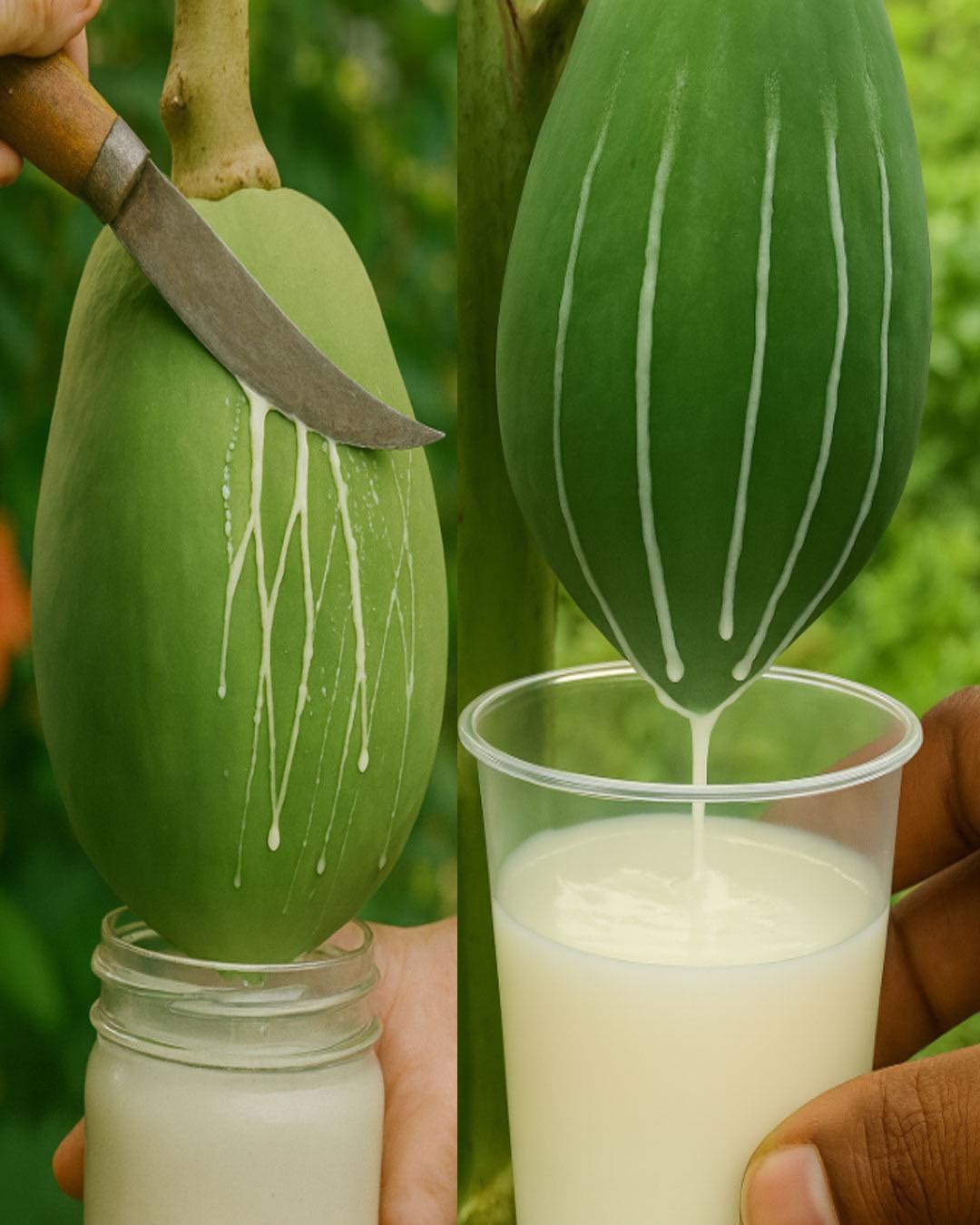
Papaya’s Milky Sap: The Hidden Treasure Most People Overlook
The papaya is a tropical fruit loved around the world for its sweet flavor, soft texture, and vibrant orange color. But beyond its delicious taste lies a lesser-known secret—one that many people have seen but rarely understood.
When you cut into a green papaya or break one of its leaves, a white, milky sap begins to ooze out. Most people ignore it, wipe it away, or even avoid it because of its sticky texture. Yet this natural substance, known as papaya latex, is far more important than it appears.
In fact, this milky sap has been quietly used for centuries in traditional medicine and is now valued in modern science, cosmetics, and industry. What seems like a simple plant fluid is actually a powerful natural compound with surprising benefits.
What Is Papaya Latex?
Papaya latex is the white, milky fluid released from unripe papaya fruit, leaves, and stems when they are cut or damaged. It acts as a natural defense mechanism for the plant, protecting it from pests and infections.
This sap is rich in enzymes, the most important being papain. Papain is a proteolytic enzyme, meaning it breaks down proteins into smaller components. Because of this, it has strong biological activity—so strong that it can irritate the skin or eyes if handled carelessly.
Despite this, when used correctly and in controlled amounts, papaya latex becomes incredibly useful.
Why This Milky Sap Matters More Than You Think
At first glance, papaya latex may seem like an insignificant byproduct. But its properties make it valuable in ways that impact everyday life—from cooking to medicine.
Its ability to break down proteins, fight bacteria, and support digestion has made it a key ingredient in both traditional remedies and modern innovations.
Traditional Uses of Papaya Latex
Long before laboratories studied papain, communities in tropical regions were already using papaya latex for practical and medicinal purposes.
1. Natural Meat Tenderizer
One of the oldest uses of papaya latex is in cooking. The enzymes in the sap break down tough muscle fibers in meat, making it softer and easier to chew. Even today, papain is used in commercial meat tenderizers.
2. Wound Care and Skin Treatment
In traditional medicine, small amounts of latex were applied to wounds to help clean them and remove dead tissue. Its antibacterial properties made it useful for preventing infections and promoting healing.
3. Digestive Support
Because papain helps break down proteins, papaya latex has been used in small, controlled doses to ease digestion. It was traditionally believed to help with bloating, indigestion, and constipation.
Modern Applications of Papaya Latex
Today, science has confirmed many of the properties that traditional healers observed. As a result, papaya latex is now used in several industries.
1. Pharmaceuticals
Papain is widely used in digestive enzyme supplements. It helps the body process proteins more efficiently and may also support anti-inflammatory treatments.
2. Skincare and Cosmetics
In the beauty industry, papain is valued for its exfoliating properties. It gently removes dead skin cells, leaving the skin smoother and brighter. Many facial masks and cleansers now include papaya enzymes.
3. Textile and Leather Processing
Papaya latex is also used in industrial processes, particularly in treating wool and leather. It helps soften materials and remove impurities without relying on harsh chemicals.
A Natural Alternative to Chemicals
ADVERTISEMENT
ADVERTISEMENT
ADVERTISEMENT
